
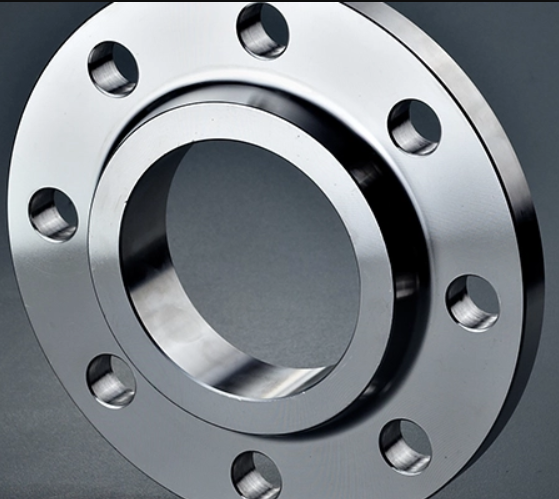
Stainless Steel Lap Joint Pipe Flanges
- Product No.
- FL-LJ_FLANGES
- Details:
Steel Lap Joint Flanges (LJ Flanges) are cost-effective, easy-to-install forged/cut steel flanges designed to mate with stub ends (lap joint stub ends). The flange slips over the raised face of the stub end and is secured by fillet welding the stub end to the pipe, while the flange itself remains loose (non-welded to the pipe) for flexible alignment. Key characteristics, specifications, and technical details are as follows:
- Core Definition: A non-welded flange that mates with a lap joint stub end, slipping over the stub’s raised face and secured via fillet welding between the stub end and pipe. Optimized for low-to-medium pressure, small-to-large diameter piping systems requiring economical, easy installation and alignment flexibility.
- Structural Features:
- Simple, lightweight design (often fabricated from steel plates for low pressure; forged for higher pressure) – reduces material and installation costs;
- Flat or raised sealing face – compatible with standard gaskets and mating flanges;
- Loose-fitting structure – allows rotational alignment of bolt holes during installation, simplifying on-site assembly;
- Mates with lap joint stub ends (separate component) – the stub end is welded to the pipe, while the flange remains detachable.
- Material Scope:
- Forged steel (medium pressure): Carbon steel (A105, Q235B), stainless steel (304L, 316L, duplex 2205/2507), alloy steel (A182 F11/F22);
- Plate-cut steel (low pressure): Q235A, 304 – compliant with ASTM, EN, JIS standards, prioritizing cost-effectiveness, corrosion resistance, and compatibility with low-pressure media.
- Key Specifications:
- Size Range: DN10 – DN600 (covers small-to-large diameters); compatible with NPS 1/2" – 24" and JIS A-series 15A – 600A.
- Pressure Class: PN10 – PN100 / Class 150 – 300 (optimized for low-to-medium pressure; not recommended for ultra-high pressure critical systems).
- Sealing Face Types: Raised Face (RF), Flat Face (FF) – matched to mating flange and gasket requirements.
- Connection Method: Fillet welding (stub end to pipe) + loose flange fit (flange over stub end) + bolted joint (flange-to-flange with gasket) – flange remains detachable for maintenance or replacement.
- Core Advantages:
- Cost-effective – lower material cost than weld neck/socket weld flanges; shared flanges can be reused across multiple stub ends;
- Easy installation – rotational alignment of bolt holes eliminates alignment errors; no welding required on the flange itself;
- Detachable design – facilitates flange maintenance/replacement without cutting the pipe or disturbing the stub end weld;
- Lightweight and compact – suitable for large-diameter low-pressure systems (e.g., drain/vent lines) where heavy flanges are impractical;
- Corrosion-resistant options (stainless steel/duplex steel) – adaptable to water, mild chemicals, and ambient air media.
- Application Scope: Widely used in oil & gas (low-pressure drain/vent lines, offshore platform utility piping), chemical processing (low-pressure raw material 输送 lines, waste water systems), power generation (auxiliary drain lines, cooling water systems), marine (shipboard ballast water lines, drain systems), municipal engineering (water supply/drainage, vent pipes), and HVAC – preferred for low-to-medium pressure, non-critical piping systems such as drain, vent, and utility lines requiring economical, easy-to-install connections.