
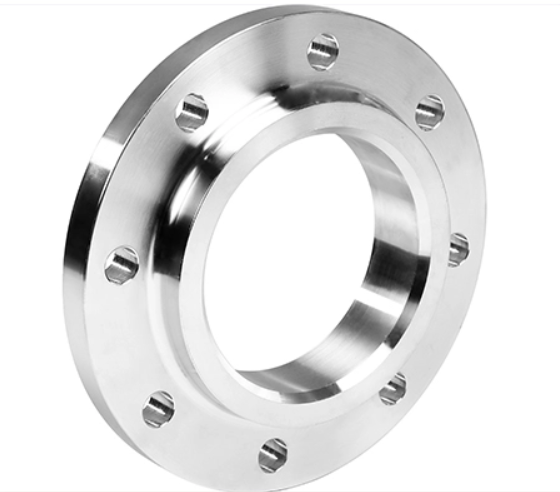
Stainless Steel Socket Weld Pipe Flanges
- Product No.
- FL-SW_FLANGES
- Details:
Steel Socket Weld Flanges (SW Flanges) are high-pressure forged pipe flanges engineered for compact, reliable connection of small-to-medium diameter pipelines. Featuring an integrated socket (recessed bore) for pipe insertion, they form a leak-proof joint via fillet welding around the pipe outer diameter and flange hub. Key characteristics, specifications, and technical details are as follows:
- Core Definition: A flange with a concentric socket (recessed end) designed to accept pipe insertion, creating a strong mechanical bond through fillet welding. Optimized for high-pressure, small-bore piping systems requiring structural integrity and minimal space.
- Structural Features:
- One-piece forged construction – eliminates assembly gaps, enhances pressure-bearing capacity and corrosion resistance;
- Integrated socket (pipe insertion depth standardized) – ensures precise pipe alignment and full contact with flange hub;
- Chamfered socket entrance – facilitates pipe insertion and weld penetration;
- Standardized bolt hole patterns and precision-machined sealing faces – compatible with mating flanges.
- Material Scope: Forged carbon steel (A105, Q235B), stainless steel (304L, 316L, duplex 2205/2507), alloy steel (A182 F11/F22) – compliant with ASTM, EN, JIS standards, prioritizing high tensile strength, fatigue resistance, and compatibility with corrosive media.
- Key Specifications:
- Size Range: DN10 – DN100 (primary small-bore focus); DN125 – DN200 (specialized medium-bore options); compatible with NPS 1/2" – 8" and JIS A-series 15A – 200A.
- Pressure Class: PN10 – PN420 / Class 150 – 2500 (optimized for high-pressure applications, outperforming slip-on flanges in compact spaces).
- Sealing Face Types: Raised Face (RF), Flat Face (FF), Ring Type Joint (RTJ) – matched to system pressure and media (e.g., RTJ for ultra-high pressure).
- Connection Method: Socket weld (pipe inserted into socket + fillet welding) + bolted joint (flange-to-flange with gasket) – welding ensures permanent, leak-proof integration; bolted connection enables maintenance.
- Core Advantages:
- Exceptional high-pressure resistance (up to PN420/Class 2500) – ideal for small-bore critical systems (e.g., instrumentation lines, high-pressure branches);
- Compact design – requires minimal installation space, suitable for dense piping layouts (e.g., chemical plants, shipboard systems);
- Forged structure eliminates internal defects, offering superior corrosion resistance (chemicals, seawater, acidic/alkaline fluids) and long service life;
- Precise pipe alignment via socket design – reduces vibration-induced stress and weld joint failure;
- Fillet weld joint is easier to inspect than butt welds, simplifying quality control.
- Application Scope: Widely used in oil & gas (wellhead instrumentation, subsea pipeline branches), chemical processing (high-pressure reagent lines, reactor auxiliary piping), power generation (turbine lubrication systems, boiler auxiliary lines), marine (shipboard hydraulic/pneumatic piping), and pharmaceutical industries – preferred for small-bore, high-pressure piping systems requiring reliable, space-saving connections.